
Compression produces heat, but heat becomes valuable only when a suitable consumer can use it at the required time and temperature. A practical assessment starts with that consumer. A large theoretical heat quantity does not by itself establish an energy-saving project.
Find a real heat demand
List possible consumers such as space heating, washing-water preheating or a suitable process. Record required temperature, flow and operating schedule. Confirm whether the demand is seasonal or continuous and what currently supplies it. A nearby heat consumer with a matching schedule may be more useful than a large annual demand that occurs when the compressors are stopped.
Identify the proposed recovery path
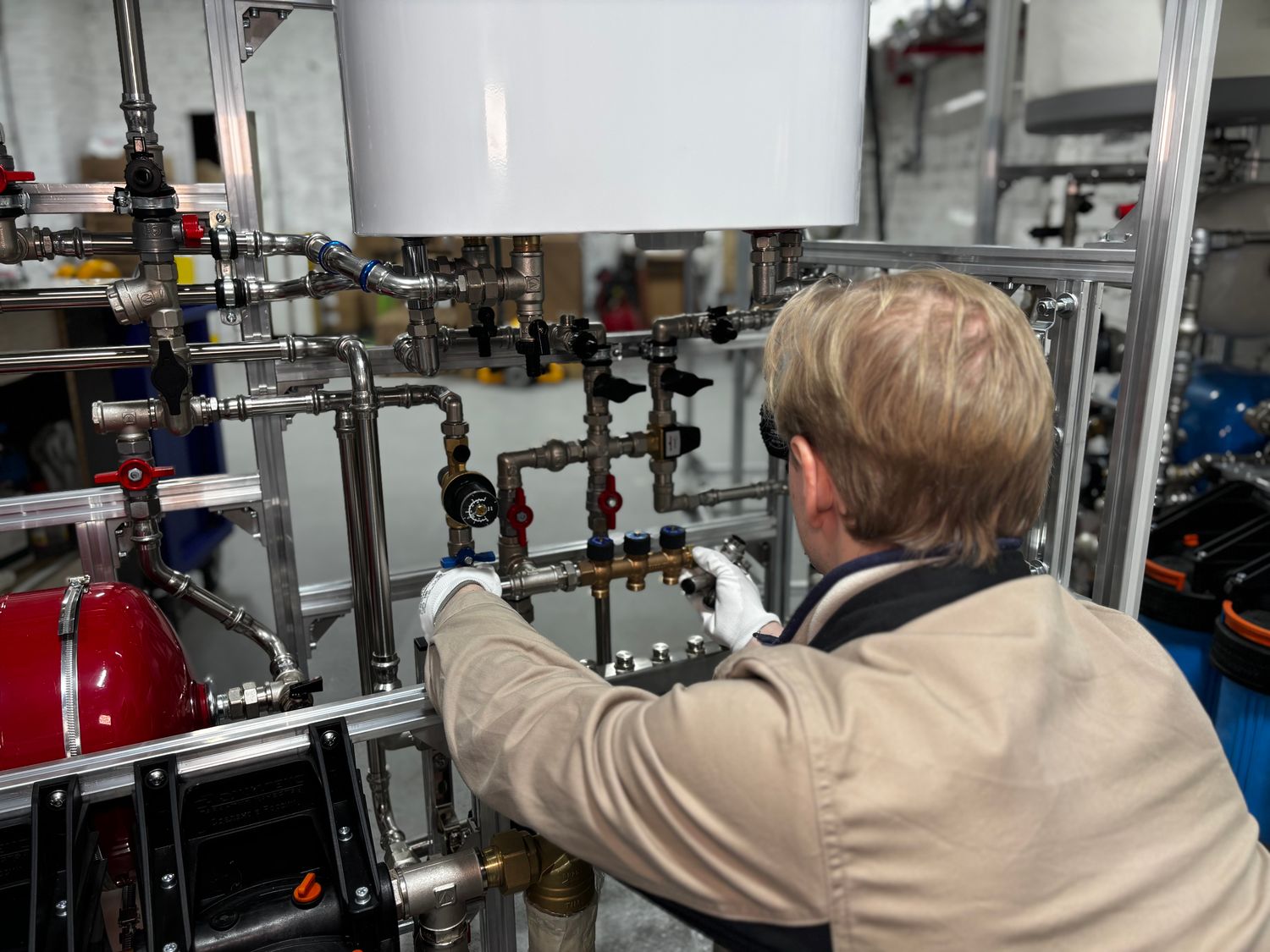
Ask the compressor supplier which heat-recovery arrangements are compatible with the actual equipment. Options depend on cooling design and may involve warm air or a heat exchanger serving a water circuit. Define the transfer equipment, controls and installation boundary. Preserve the compressor’s required cooling function when useful heat is not demanded; the recovery system should not depend on a consumer being permanently available.
Match operating hours and temperature
Compare the measured compressor operating pattern with the heat consumer’s demand. Use the hours when both are available, not total annual compressor hours by default. Check the usable temperature at the delivery point after heat transfer and distribution. Include any storage or backup heat source needed by the consumer. These interfaces determine whether recovered heat is useful rather than merely present.
Keep thermal energy separate from electricity savings
Illustrative assumptions: a proposal offers 40 kW of recoverable heat during 3,000 hours when a consumer is available. The potential is 40 × 3,000 = 120,000 kWh of thermal energy before distribution losses. This is not automatically 120,000 kWh of electricity saved. Actual avoided energy depends on the existing heater, its efficiency, usable heat and additional pump or fan consumption.
Check the installation and running costs
Request the heat exchanger or duct design, permissible pressure losses, water-circuit requirements, controls, maintenance and installation work. Confirm materials and separation requirements for the intended water use. Compare the project against the actual cost of the displaced heat source and the expected useful operating period. Do not apply a universal recovery percentage or payback claim to every installation.
Define how the result will be measured
Agree on measurements at the recovery boundary and at the heat consumer, together with the baseline heating demand. Record relevant temperatures, flow, operating overlap and auxiliary electricity. After commissioning, compare useful delivered heat and avoided heating input under comparable conditions. Keep cooling performance and production reliability in the review so a heat-recovery benefit is not accepted at the expense of the air-supply system.