
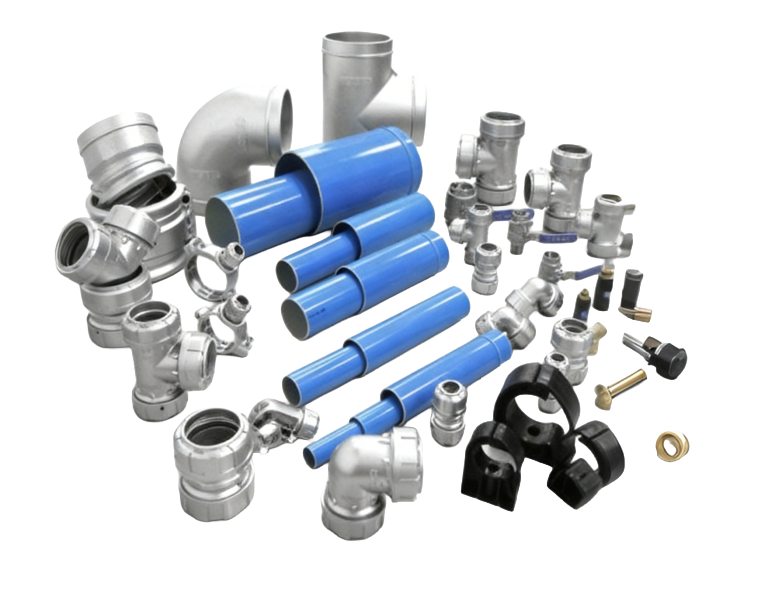
When a machine reports low air pressure, the compressor may not be the cause. A restriction in treatment equipment, a branch pipe or the final hose can create a local problem. A short measurement plan helps identify which part of the supply path needs attention.
Measure several points during the same event
Choose a production cycle that reproduces the complaint. Record pressure at the compressor discharge, after treatment, at the branch entrance and at the machine inlet. Use suitable, comparable instruments and note the flow conditions. A set of readings taken at unrelated times can make normal demand changes look like a permanent restriction. Preserve the minimum pressure and event duration, not just an average.
Separate equipment losses from pipe losses
Compare the pressure before and after each major treatment component, then examine the distribution route. The DOE sourcebook identifies restrictions throughout the system as an efficiency concern. A rising filter pressure difference suggests a different action from a pressure loss that appears mainly along a long branch. Keep the diagnosis tied to the actual operating flow and the component manufacturer’s acceptable range.
Inspect the last connection to the machine
A short but restrictive hose, coupling, regulator or valve can limit an otherwise adequate supply. Record connection sizes and the flow rating basis, including any pressure conditions. Ask the equipment supplier to confirm the complete inlet assembly. Increasing the main pipe diameter will not necessarily solve a restriction that remains at the final connection. Check the simplest local causes before planning major pipe replacement.
Design for the largest relevant flow
Pipe selection needs the proposed layout, effective length, simultaneous demand, permitted pressure loss and expansion plan. Ask the designer to include fittings and the most demanding branches, rather than quote a diameter from average plant consumption. Check whether the air consumption figures represent uncompressed-air equivalent flow or actual volume inside the pipe. Mixing those definitions can produce an unsuitable design.
Use a controlled before-and-after comparison
Repair or replace the identified restriction, then repeat the same production event and measurement positions. If a lower compressor setting is proposed, confirm machine inlet pressure and product quality throughout the cycle. Avoid changing several unrelated settings at once: the commissioning record should show which modification produced the observed result and whether the improvement persists during peak production.
Prepare a useful enquiry package
Provide a route sketch, pipe and fitting details, treatment specifications, pressure measurements, observed symptoms and planned production changes. Ask for expected pressure at the critical user, not only at the compressor. Agree on acceptance conditions before installation. Retain the pressure profile as a reference for maintenance, so a later filter or drain problem is not mistaken for a need to increase compressor capacity.