
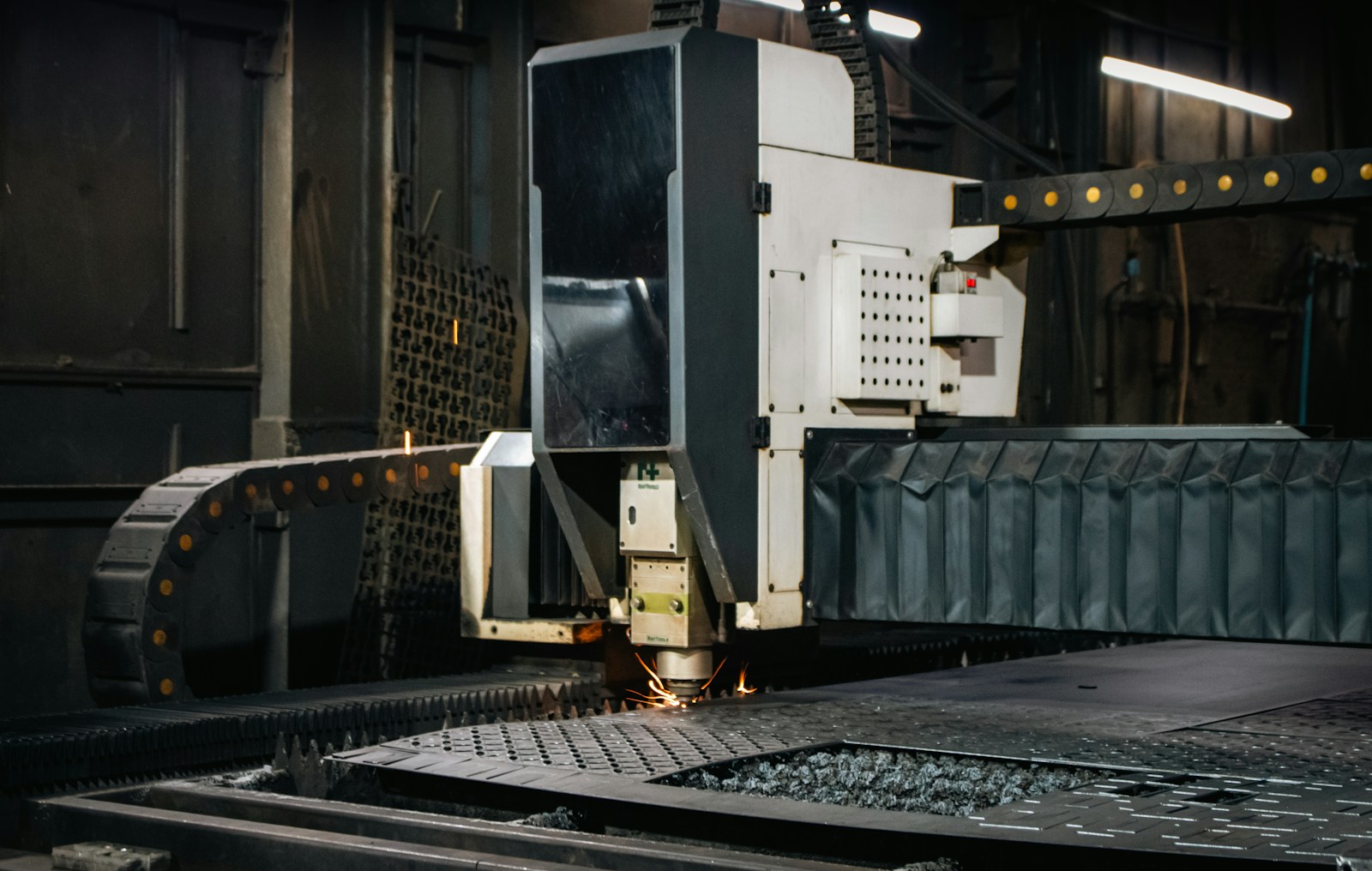
Laser cutting does not have one universal compressed-air specification. The laser model, material, thickness, nozzle and required edge finish determine what the gas system must deliver. Start with the laser manufacturer’s installation requirements and prove the intended cutting process before selecting a package.
Confirm which gas does which job
Separate machine service air from cutting assist gas. A system may need one specification for actuators and another for the cutting head. Compressed air, nitrogen and oxygen have different cutting characteristics; the Atlas Copco assist-gas guide explains the trade-offs. Air contains oxygen and does not provide the same oxidation control as a suitable nitrogen process. Confirm that the laser and selected material recipe permit air-assisted cutting.
Request a written interface specification
Ask the laser supplier for minimum and maximum inlet pressure, permitted pressure fluctuation, flow during cutting and piercing, peak duration, connection size, and required air-quality limits. Record nozzle options and likely future recipes. Do not choose a compressor solely from the laser’s optical power rating: two processes at the same laser power can have different gas demand. Confirm the applicable figures for the actual machine configuration.
Specify pressure where it matters
The compressor discharge rating is upstream of the dryer, filters, receiver and supply pipe. Establish the pressure available at the laser inlet during the highest-demand accepted recipe. Ask how losses change as filters age. Where a higher-pressure circuit is proposed, confirm that every component is rated for that service. Avoid prescribing a universal pressure or motor size without the machine requirements.
Treat moisture and oil as separate requirements
Ask for permitted particles, moisture and oil, the reference standard if specified by the laser manufacturer, and the agreed sampling point. Pressure dew point describes condensation at the stated pressure; it must be considered against the downstream temperature. Ordinary filtration does not replace drying. Agree on the treatment train, monitoring and service intervals, and verify actual delivered quality rather than inferring it from a clean-looking pipe.
Match storage and compressor response to the cycle
Capture the longest demanding cut and the start of a piercing sequence. A receiver can moderate brief demand changes, but repeated long cuts require adequate sustained compressor and treatment capacity. For an integrated package, confirm whether the supplied dryer and receiver meet the specified duty at site conditions. Review ventilation, ambient temperature, drains, electrical supply and maintenance access before deciding that a compact arrangement fits.
Commission with a real cutting trial
Use representative materials, thicknesses and nozzles. Log inlet pressure during the cycle, check the agreed air-quality indicators, and assess cut edge, dross and downstream processing against the production acceptance criteria. Record the recipe and limits. If nitrogen is needed for the required finish, evaluate an appropriate nitrogen supply and its feed-air requirements separately. Send the completed interface specification with the enquiry so the compressor and laser suppliers can confirm their responsibilities.
Sources and further reading
Prepared by the LeadCom editorial team from the references below. Selection checklists and examples are editorial guidance; final requirements depend on the process and equipment documentation.